
Year 5 Literacy with ICT Instructional workshop
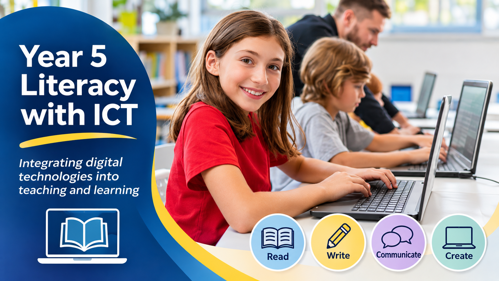
Learn how to integrate digital technologies into Year 5 literacy teaching to strengthen students’ literacy skills, develop their ICT capability and improve classroom learning.
Online Professional Development Workshop | Primary Education | Year 5
Professional Development Duration: 10 hours
Australian Professional Standards for Teachers (APST): 2.5.2, 2.6.2, 3.4.2
Workshop Overview
Developing students' literacy skills while building their confidence and capability with digital technologies is an important part of contemporary primary education. When integrated purposefully into teaching and learning, ICT can provide meaningful opportunities for students to develop their reading, writing, communication and digital literacy skills.
This workshop explores how Year 5 teachers can integrate digital technologies into literacy teaching through curriculum-informed planning, effective teaching strategies and practical classroom activities. It focuses on helping educators make informed decisions about how technology can support students' literacy development while strengthening their ICT capability.
Educators will examine their existing teaching practices, explore opportunities to build their professional confidence with ICT and develop strategies for planning, implementing and assessing technology-supported literacy experiences. Through practical examples and classroom activities, the workshop demonstrates how digital technologies can enhance literacy learning while encouraging students to become increasingly independent and capable users of ICT.
1. Learning Outcomes
By the end of this workshop, educators will be able to:
Evaluate existing teaching practices to identify opportunities for improving ICT integration in Year 5 literacy learning.
Understand the relationship between literacy and ICT capability, including how digital technologies can support students' development of essential literacy skills.
Apply effective teaching strategies that integrate ICT purposefully into reading, writing, communication and text creation.
Select and use appropriate digital technologies to support meaningful, curriculum-connected literacy experiences.
Develop students' ICT capability by supporting their confidence, independence and ability to make informed decisions when using digital tools.
Plan and implement learning experiences that combine literacy objectives with opportunities to develop students' digital competencies.
Assess students' learning and ICT capability through appropriate observation, assessment and reflection strategies.
Strengthen professional confidence and competence in using ICT to support effective literacy teaching.
Adapt practical classroom activities to suit students' learning needs, available technologies and existing teaching environments.
2. Topics Covered
Understanding ICT Integration in Year 5 Literacy
Explore the relationship between literacy learning, ICT capability and curriculum expectations.
Examine how digital technologies can support students' reading, writing, communication and understanding of different text types while considering the importance of purposeful technology integration.
Reflect on current teaching practices and identify opportunities to strengthen the role of ICT in literacy learning.
Developing Teacher Confidence and ICT Competence
Investigate the professional knowledge and skills teachers need to integrate ICT effectively into literacy teaching.
Consider how educators can build on their existing experiences, develop confidence with available technologies and make informed decisions about the digital tools and teaching strategies they use.
Explore approaches to professional learning that support ongoing improvement in classroom practice.
Digital Technologies for Literacy Teaching and Learning
Examine how a range of digital tools can support different aspects of literacy learning, including:
Word processing for planning, drafting, editing and publishing written texts.
Presentation and multimedia software for communicating ideas.
Blogs, wikis and other digital communication tools.
Digital storytelling and the creation of multimodal texts.
Online information resources for research and inquiry.
Digital tools that support collaboration and the presentation of learning.
Consider how the selection of technology should be guided by literacy objectives, student needs and the learning context.
Effective Teaching Strategies for ICT Integration
Explore teaching strategies that support the purposeful use of digital technologies within literacy lessons.
Investigate approaches to scaffolding learning, modelling ICT skills, providing appropriate teacher intervention and encouraging students to develop independence when using technology.
Consider how teachers can support students in applying their existing ICT knowledge and skills to new literacy learning experiences.
Planning and Implementing ICT-Supported Literacy Activities
Examine how to design meaningful literacy activities that integrate ICT with curriculum learning objectives.
Explore practical approaches to lesson planning, selecting suitable digital resources, organising classroom activities and supporting students with different levels of ICT experience.
Consider how technology can be incorporated into existing literacy programs without unnecessarily increasing teacher workload.
Assessing Literacy Learning and ICT Capability
Investigate how teachers can observe, monitor and assess students' literacy learning alongside their developing ICT capability.
Explore approaches to gathering evidence of learning, identifying student progress and using assessment information to inform future teaching decisions.
Consider the importance of evaluating both the literacy learning achieved and the effectiveness of the ICT teaching strategies used.
Practical Year 5 Literacy Learning Experiences
Explore classroom activities that demonstrate how ICT can be integrated into literacy learning.
Examples include:
Creating and editing narrative, persuasive and expository texts.
Using word processing features to investigate paragraph structure and organisation.
Developing digital presentations to communicate information and ideas.
Creating and interpreting multimodal texts.
Using online information sources for research and evaluation.
Developing digital communication and collaboration skills.
Publishing and sharing students' literacy work using appropriate digital tools.
These activities provide opportunities to connect literacy learning with students' developing ICT capability while supporting meaningful classroom application.
3. Applying Learning to Practice
Effective ICT integration involves more than introducing digital tools into literacy lessons. It requires teachers to make informed decisions about how technology supports learning objectives, responds to students' needs and contributes to the development of literacy skills and ICT capability.
This workshop encourages educators to reflect on their existing teaching approaches, investigate opportunities for improvement and apply practical strategies within their own classrooms.
Through the Academy's Theory into Practice approach, members can:
Evaluate current teaching practice: Examine how ICT is currently being used in literacy lessons and identify opportunities to strengthen its educational value.
Build professional knowledge: Use the Wisdom AI Search Tool to investigate questions about literacy teaching, ICT capability and effective technology integration.
Apply practical strategies: Select and adapt workshop activities and lesson plans to introduce purposeful ICT-supported literacy experiences.
Develop teaching confidence: Begin with familiar technologies and manageable improvements before exploring more advanced approaches to ICT integration.
Reflect on student learning: Use the Membership Workbook to critically reflect on teaching decisions, student engagement, literacy outcomes and the development of ICT capability.
Learn with other educators: Share classroom experiences, practical teaching ideas and successful approaches through the Academy Community.
The aim is to help educators develop the knowledge, confidence and professional judgement needed to integrate digital technologies effectively into Year 5 literacy teaching while continually improving their classroom practice.
4. What Will You Learn?
This workshop will help you understand how to integrate digital technologies into Year 5 literacy teaching in ways that support meaningful learning outcomes.
You will learn how to evaluate your existing ICT teaching practices, select appropriate digital tools and apply effective strategies that support students' literacy development and growing ICT capability.
You will also explore practical approaches to planning, teaching and assessing technology-supported literacy activities, including ways to help students become more confident, independent and capable users of digital technology.
Importantly, the workshop encourages you to connect your professional learning with your own classroom experiences, helping you make informed decisions about how ICT can contribute to improved literacy teaching and learning.
5. Who Is This Workshop For?
This workshop is designed for:
Year 5 teachers seeking to integrate digital technologies more effectively into literacy teaching and learning.
Upper primary teachers interested in practical ICT-supported literacy strategies that can be adapted to their classrooms.
Literacy coordinators supporting the development and implementation of effective literacy teaching practices.
Pedagogical leaders seeking to support educators in strengthening literacy teaching, developing ICT capability and integrating digital technologies purposefully into classroom practice.
Curriculum leaders responsible for supporting ICT integration and curriculum development across primary education.
Teachers developing their ICT confidence who want practical guidance on incorporating digital technologies into literacy learning.
Experienced teachers interested in critically reflecting on and improving their existing approaches to ICT integration.
The workshop supports educators with different levels of ICT experience. You do not need to be a technology specialist to benefit from the professional learning opportunities provided.
6. Australian Professional Standards for Teachers
This workshop is aligned with the following Australian Professional Standards for Teachers at the Proficient career stage:
APST 2.5.2 – Literacy and Numeracy Strategies
Apply knowledge and understanding of effective teaching strategies to support students' literacy and numeracy achievement.
APST 2.6.2 – Information and Communication Technology (ICT)
Use effective teaching strategies to integrate ICT into learning and teaching programs to make selected content relevant and meaningful.
APST 3.4.2 – Select and Use Resources
Select and/or create and use a range of resources, including ICT, to engage students in their learning.
These standards reflect the workshop's emphasis on effective literacy teaching, purposeful ICT integration and the selection and application of appropriate digital teaching resources.
7. Continue Your Professional Learning
Ready to strengthen your Year 5 literacy teaching?
Imagine what you could achieve in just 90 days!
Join the ICT in Education Teacher Academy and begin a professional learning journey shaped by your teaching questions, classroom experiences and professional goals.
Explore evidence-informed strategies for integrating ICT into literacy teaching, apply practical ideas in your classroom and reflect on how your teaching decisions support student learning.
With online workshops, practical lesson plans, the Wisdom AI Search Tool and a supportive educator community, you can continue developing your confidence and capability with digital technologies.
Start with 90 days. Keep growing at your own pace.